A storm door is worth it in St. Louis if your entry door is older but still solid, or if you want a screen and some protection from rain and sun on an exposed entry. It is usually not worth it purely for energy savings on a new, insulated door — that is the U.S. Department of Energy's position, and it matches what we see on porches every week. Below: the DOE's guidance in plain English, the four-question test we use, the direct-sun warning most people never hear, and what a storm door costs installed.
- DOE: "Adding a storm door can be a good investment if your existing door is old but still in good condition. However, adding a storm door to a newer, insulated door is not generally worth the expense."
- The real value on a modern door is convenience and protection — a screen for shoulder-season air, and a shield against UV fade and driven rain on the main door.
- Sun warning: a glass storm door can trap heat and damage the entry door behind it if that door gets more than a few hours of direct sun a day. Use low-E glass or a vented design and check the door maker’s rules.
- Retractable-screen models are the most-installed type in St. Louis; full-view for maximum light; mid-view for kids and dogs.
- Installed storm doors start at $680 at Galve; a single-morning install, usually within a week of the quote. No permit needed in St. Louis City or County.
What the Department of Energy actually says about storm doors
The DOE's Energy Saver guide on doors is short and unusually direct, so here it is in its own words:
The reasoning is simple. An insulated steel or fiberglass entry door already rates around R-5 to R-6. A storm door adds a still-air pocket in front of it, which helps an old, leaky wood door a lot and a tight modern door only a little. If your main door is the weak link, a storm door is a cheap fix. If your main door is already good, the storm door is buying you something other than energy — and that "something" is often still worth it. It is just not an energy purchase.
The same guide lists the features that matter if you do buy one: "High-quality storm doors use low-emissivity (low-e) glass or glazing to increase energy efficiency. Other features may include screens with self-storing pockets, full-length screens with removable glass panels, and screens and glass that slide past each other." And it notes that wooden storm-door frames "require more maintenance than the other types" — aluminum, steel and fiberglass frames are what we install.
The four-question test we use at the measure
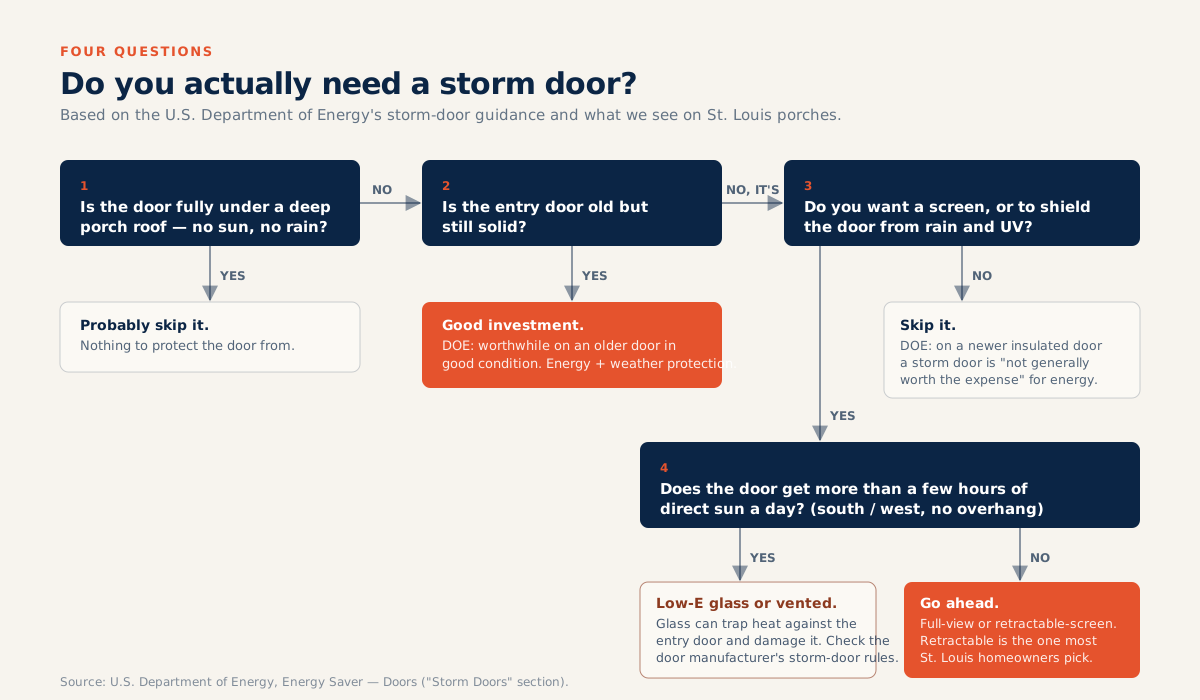
- 01Is the door fully under a deep porch roof?If sun and rain never reach it, a storm door has nothing to protect and little air to seal. Most people in this situation want a screen door, not a storm door — or nothing.
- 02Is the entry door old but still solid?A 1960s wood door with good bones is exactly the DOE’s "good investment" case. The storm door cuts drafts, keeps rain off it, and buys years before a full replacement. If the entry door is rotted or warped, replace it instead — see our cost guide.
- 03Do you want a screen, or a shield?On a new insulated door, this is the only honest reason. A screen for April and October air; UV protection so a dark stain does not fade; a barrier against wind-driven rain at the threshold. If none of those matter to you, skip it.
- 04Does the door get more than a few hours of direct sun?South- and west-facing entries with no overhang. This is the heat-trap case below. Low-E glass, a vented or screen-forward design, and a look at the entry door manufacturer’s storm-door policy before anything is ordered.
The direct-sun warning nobody mentions
This is the part of the DOE guidance that matters most in St. Louis, where a west-facing porch sees full afternoon sun from May through September:
What "damage" looks like on a service call: a dark-painted steel door with a warped skin, a fiberglass door with a blistered stain finish, or — worst — a wood door with a split panel. The glass turns the space between the two doors into a greenhouse. Entry-door manufacturers know this and say so in the warranty. Therma-Tru's, for example, allows a "properly installed and properly vented storm door" but takes no responsibility for damage to the door "as a result of the storm door," and it advises against installing its PVC lite frames behind a storm door or painting them dark colors in direct sun. We read that policy for the specific door before we hang a storm door on it.
- Low-E storm glass reflects a large share of the solar heat before it enters the pocket. It is the option we recommend on any south or west entry.
- Retractable or self-storing screens let you run the screen instead of the glass through summer, which also solves the problem.
- Lighter entry-door colors absorb less heat. If the entry door is black or navy and faces west, that is a conversation before you buy either door.
Storm door vs. screen door: the difference
People use the words interchangeably; they are different products. A screen door is a frame with mesh — air, bugs out, no glass, no weather protection. A storm door is a full second door with glass panels, weatherstripping, a closer and a latch; most modern ones also carry a screen, either as a swap-in panel or a hidden retractable one. If you want a screen and protection, you want a storm door with a screen. If you only ever want airflow and the door is sheltered, a screen door is cheaper and lighter.
| Type | What it is | Best for | Trade-off |
|---|---|---|---|
| Full-view | One sheet of glass, top to bottom; screen swaps in seasonally | Maximum light; covered or north-facing entries | Swapping the panel twice a year; low-E needed on sunny faces |
| Retractable screen | Glass stays in place; a hidden screen rolls down from the top rail | Most St. Louis front doors — light or air on demand | Costs more than a fixed-screen model |
| Mid-view | Solid kick panel on the bottom, glass on top | Kids, dogs, back doors, rentals | Less light |
| Security storm door | Steel frame and grille with a keyed deadbolt | Ground-floor entries where a second lock matters | Heavier; more visual |
| Screen door (no glass) | Frame plus mesh only | Sheltered doors, seasonal cabins | No weather protection at all |
Retractable-screen models are roughly half of what we install, and full-view is most of the rest. The details on each — brands, glass options, closer settings — are on our storm door page.
What a storm door costs installed in St. Louis
Storm doors are the cheapest exterior door project there is. Installed prices at Galve start at $680; a Larson Tradewinds retractable-screen unit is from about $890 and a Larson Platinum from about $1,290, with Andersen and Pella models in between. Custom colors add a few weeks and a bit more. A single storm door is a single-morning install — usually under three hours — and we can typically be at your door within a week of the quote because most units are stock.
What the install actually involves
A storm door mounts to the brickmold — the exterior trim around your entry door — via a Z-bar frame. The things that separate a storm door that works for twenty years from one that slams, drags and bends:
- Clearance check. The entry door's handle must clear the inside of the storm door or they collide every time you open up. We measure this before drilling anything.
- Brickmold condition. Rotted or out-of-square brickmold is replaced first; a storm door hung on soft trim pulls loose.
- Closer tension. Set to the weight of your door, not left at the factory default that slams light doors and barely closes heavy ones.
- Sweep height. Most storm doors ship with the bottom sweep at maximum height; if your threshold is lower, it drags and wears flat in a year. We trim it before hanging.
- Wind chain. A small add-on that stops a gust from throwing the door past its stops — the number-one cause of bent frames on St. Louis storm doors.
A storm-door morning runs 8:00 to about 11:00 — Z-bar first, slab second, closer and latch last. That morning, and the longer day an entry door takes, are laid out in our install day guide.
When a storm door is the wrong fix
A storm door can hide a failing entry door for a while. It cannot fix it. If the main door has a soft bottom rail, daylight around the weatherstrip, a threshold that has sunk, or a frame that has racked so the deadbolt no longer lines up, the right move is a new entry unit — from about $1,890 installed for fiberglass, less for steel — and then, if you still want a screen, a storm door in front of it. The math is in our St. Louis front door cost guide, and the material choice in fiberglass vs. steel vs. wood.
If you are not sure which of those two cases you are in, run the three-minute check in 9 signs your front door needs replacing (and 3 that only need a repair) first — a storm door in front of a rotted sill just hides it for another winter.
Not sure which case you are? Send a photo of the door and the porch. We will tell you straight — including "you don't need one."
Questions we get asked about this
- U.S. Department of Energy, Energy Saver — Doors (Storm Doors section) — All quoted guidance on when a storm door pays, features, and the direct-sun warning. Archived — DOE removed its Energy Saver pages in 2026 (reported by govexec.com, July 2026); quotes verified against the prior live text and independent reporting of the same language.
- Therma-Tru — Fiberglass and Steel Door Systems Limited Warranty — Storm-door and dark-color / heat-buildup provisions.
- St. Louis County — Residential Building Construction (permit exemptions) — “Installation of storm windows and storm doors” is exempt from a building permit.
- City of St. Louis — When a Residential Building Permit is Needed — “Installation of storm windows and doors” exempt; historic districts reviewed by the Cultural Resources Office.
- Galve Door Co. — Storm Door Installation — Published starting prices, brands, install time and lead time.
Written by the people who measure, quote and hang doors across Saint Louis every week — installers, detailers and the office team. Every figure is sourced; every recommendation is one we would give at your kitchen table.
About Galve Door Co. →