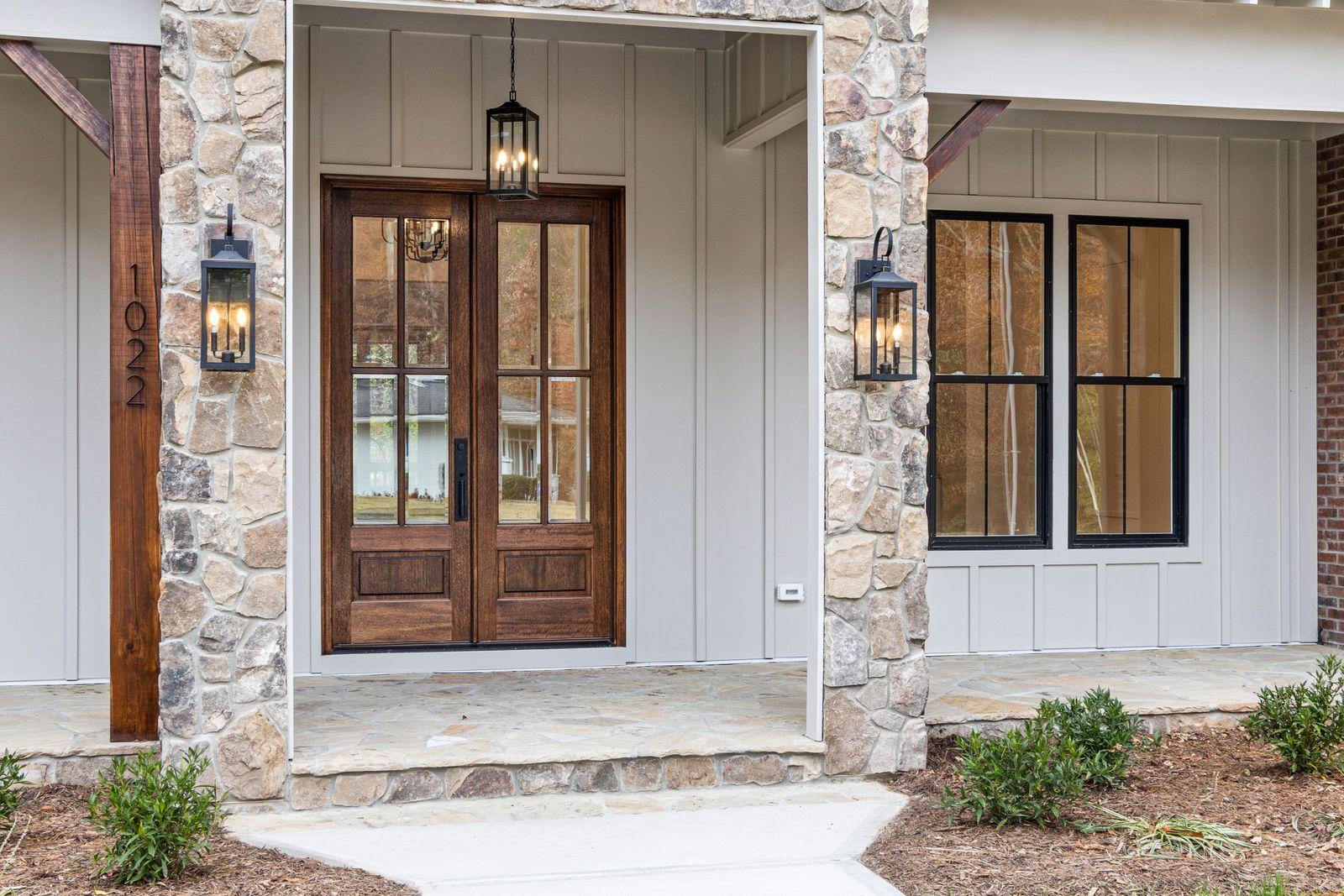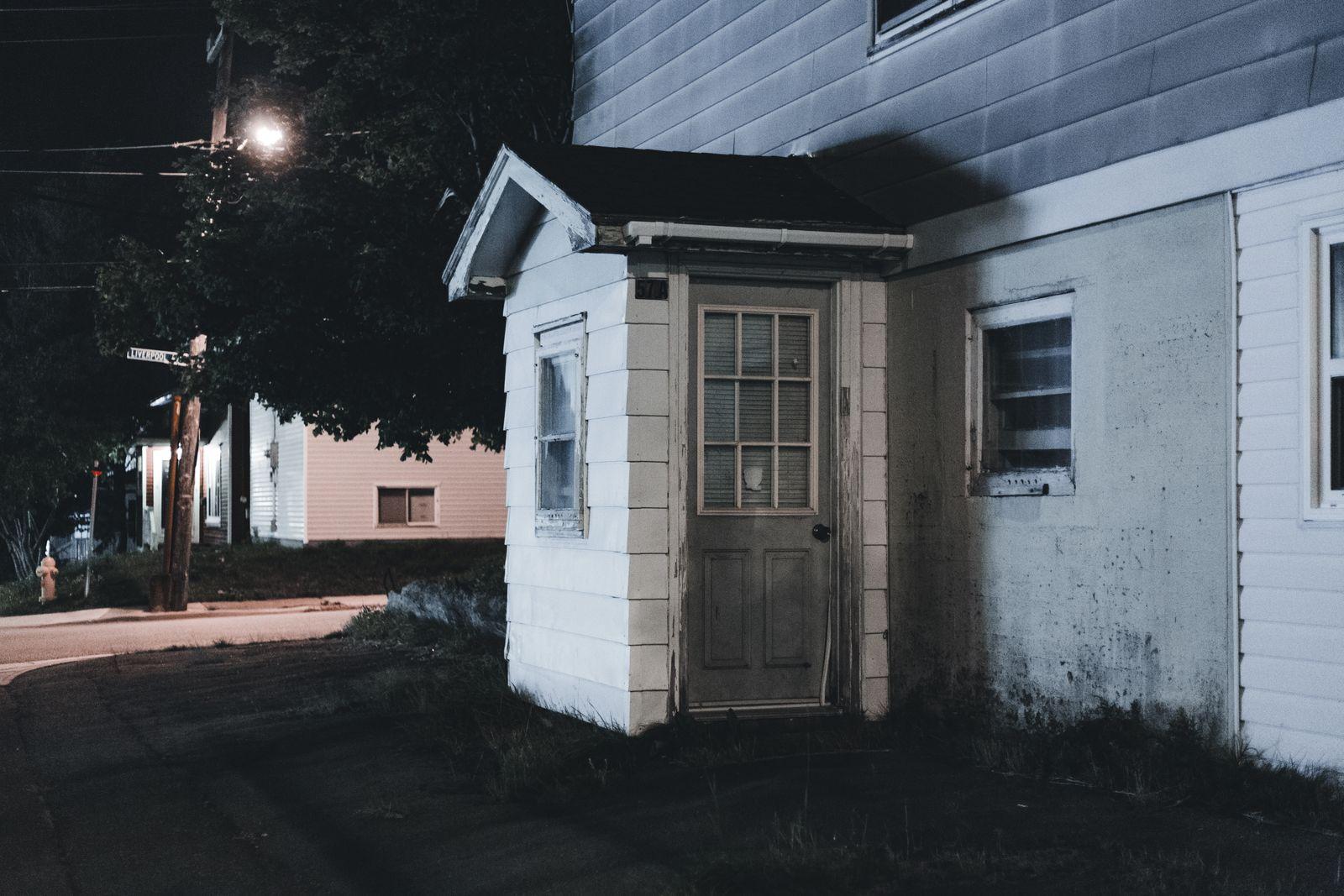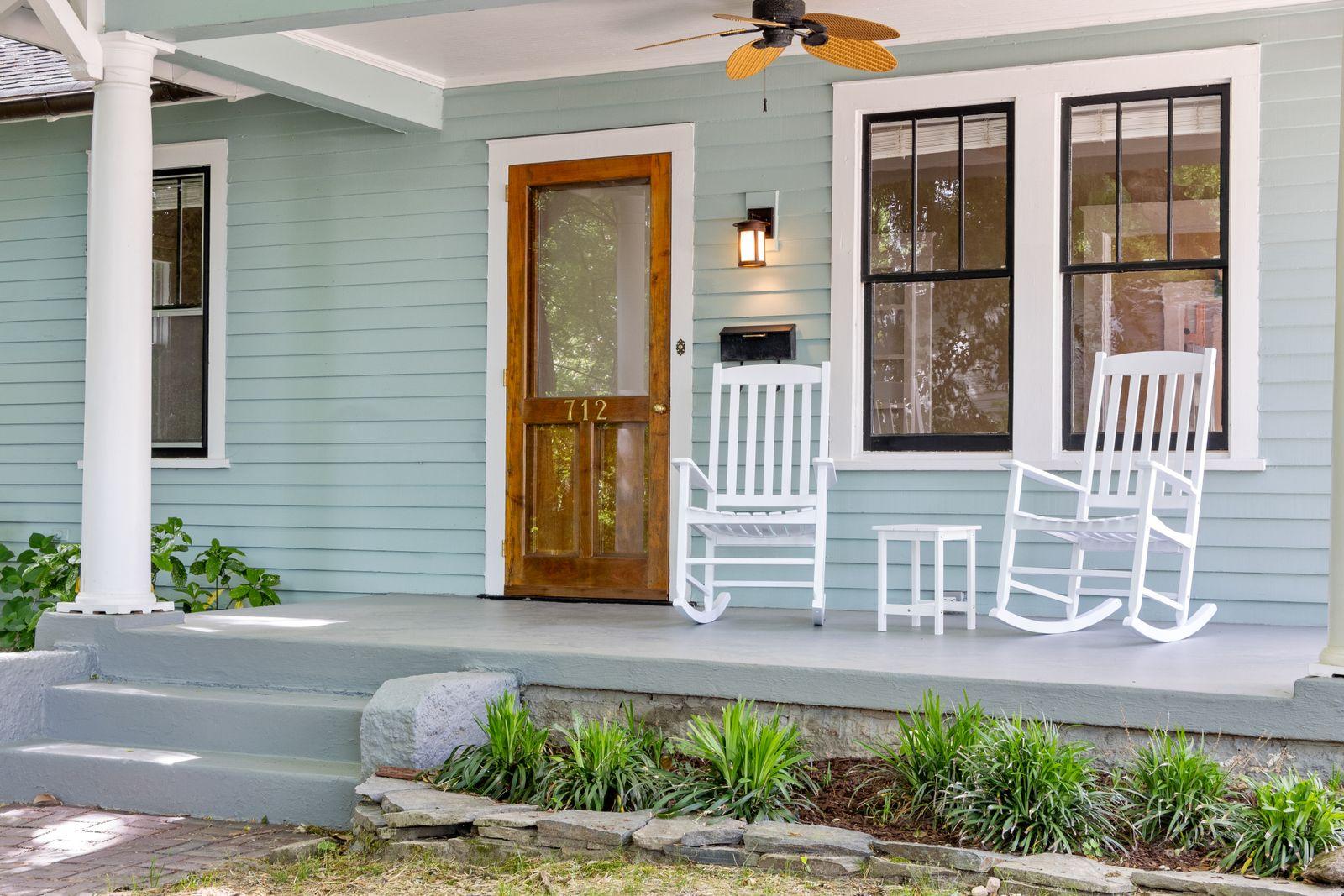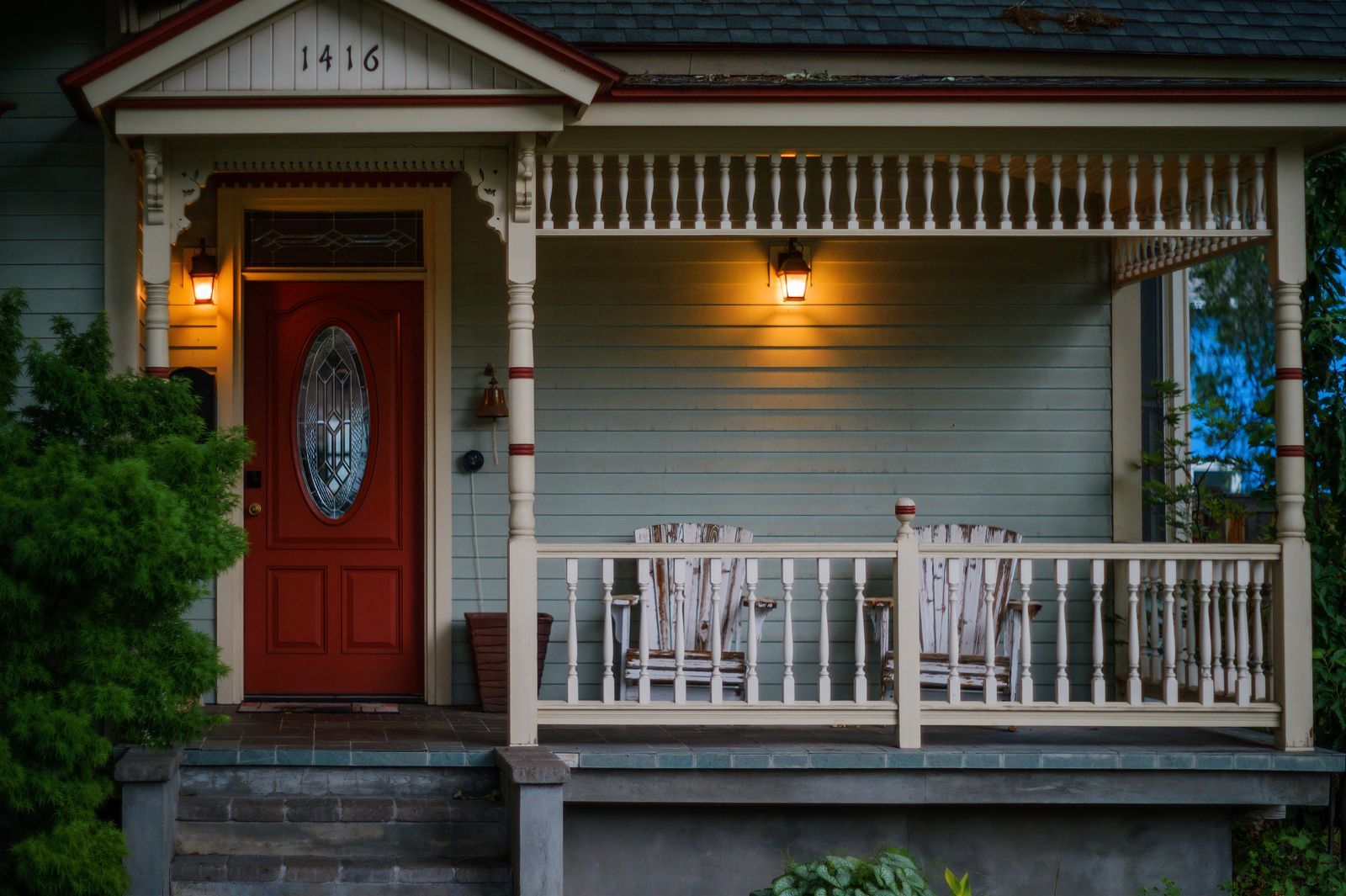
For most St. Louis front doors, fiberglass is the right answer: it insulates as well as steel, shrugs off our humid summers and freeze-thaw winters, does not dent or rust, and starts around $1,890 installed. Steel is the value pick for side, back and garage-entry doors (typically quoted below fiberglass). Solid wood is the beautiful pick — for a covered entry, with a homeowner willing to refinish it. Here is the whole comparison, with the numbers behind it.
- Insulated steel and fiberglass doors both rate about R-5 to R-6; the Department of Energy notes an insulated slab has over five times the insulating value of a solid wood door the same size.
- St. Louis is in ENERGY STAR’s North-Central climate zone. An ENERGY STAR (v7.0) opaque door needs a U-factor of 0.17 or lower; half-lite 0.23; more than half-lite 0.26.
- Fiberglass wins on durability in weather; steel wins on price and security feel; wood wins on looks and repairability, and loses on maintenance.
- Galve’s published starting price: fiberglass about $1,890 installed (standard 36×80 single door); steel is quoted below that, solid wood above it.
- Whatever the material, the install decides the result — a plumb frame, a sill pan and correct weatherstrip matter more than a few R-value points.
The quick answer, by situation
| Your situation | We usually recommend | Why |
|---|---|---|
| Front door, little or no porch roof (sun and rain hit it) | Fiberglass | No swelling, no rust, finish holds up to south/west sun |
| Front door under a deep covered porch | Fiberglass or wood | Wood is safe here; fiberglass still needs less upkeep |
| Side door, back door, door to the garage | Steel | Cheapest, strong, insulated; dents matter less here |
| Historic district or a 1900s brick home | Wood (or woodgrain fiberglass) | Design review may require it; fiberglass woodgrain passes from the sidewalk |
| Rental or flip | Steel | Lowest cost with a lifetime slab warranty on most lines |
| Maximum light, big glass | Fiberglass | Full-lite fiberglass units are stable; wood with big glass moves seasonally |
What each door is actually made of
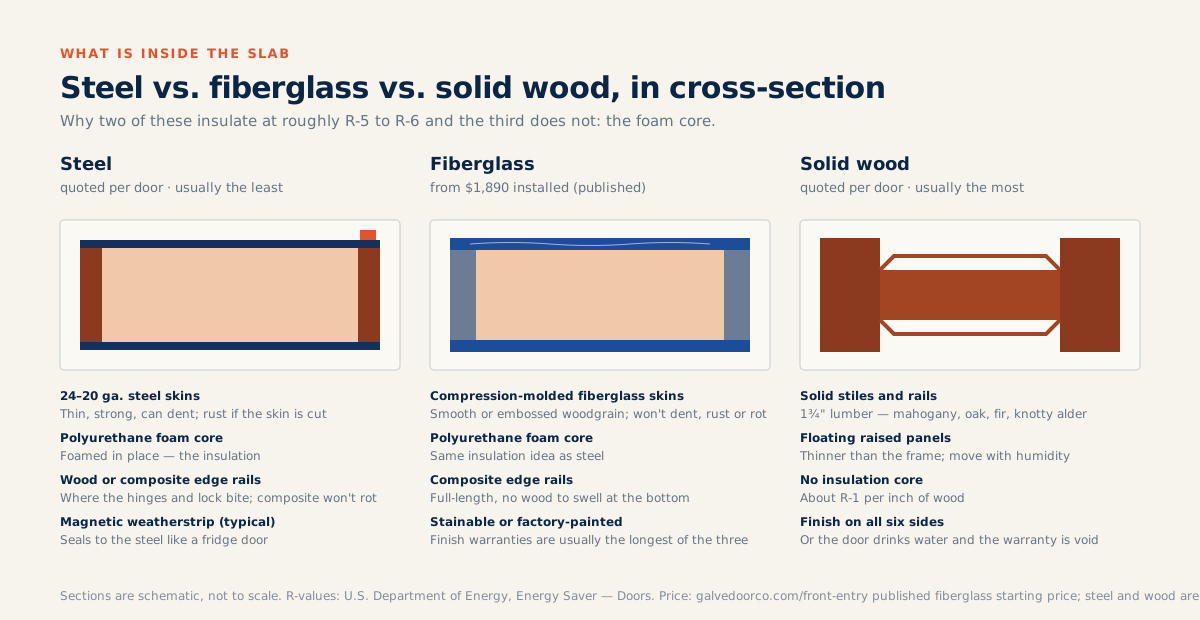
The material name describes the skin. What is behind the skin is what decides how the door insulates and how it ages.
Steel
A steel door is two thin steel sheets (usually 24 to 20 gauge — lower is thicker) over a polyurethane foam core, with wood or composite rails at the edges where the hinges and lock screw in. The Department of Energy describes the common version as "a steel skin with a polyurethane foam insulation core" that "usually includes a magnetic strip (similar to a refrigerator door magnetic seal) as weatherstripping," and adds that "if installed correctly and not bent, this type of door needs no further weatherstripping." Steel doors are strong, cheap and well insulated. Their weak point is the skin: it dents, and a scratch that gets through the primer can rust.
Fiberglass
A fiberglass door is compression-molded fiberglass skins — smooth, or embossed with a woodgrain texture — over the same kind of polyurethane foam core, with full-length composite rails so there is no wood at the bottom edge to soak up water. Therma-Tru, which introduced the first fiberglass entry door in 1983, describes its doors as having "a solid polyurethane foam core which is among the most energy-efficient door materials available today." Fiberglass does not dent under normal use, cannot rust, does not swell, and takes paint or stain. The brands we install most — Therma-Tru, Masonite, Jeld-Wen, Pella, Steves & Sons, Codel — all build on this construction.
Solid wood
A wood door is joinery: vertical stiles and horizontal rails of 1¾" solid lumber, with panels floating in grooves so they can move with humidity without splitting the frame. There is no insulation core — wood is about R-1 per inch — which is why the DOE puts an insulated door at "more than five times the insulating value of a solid wood door of the same size." What wood has is depth: real grain, real weight, a finish you can sand and renew for decades. Mahogany, oak, fir and knotty alder are the species we see most in St. Louis.
Energy efficiency: R-values, U-factors and the ENERGY STAR label
Doors are rated two ways. Manufacturers talk about R-value (resistance to heat flow — higher is better). The NFRC label on the door and the ENERGY STAR program use U-factor (rate of heat flow — lower is better; U ≈ 1/R for the whole unit including glass and frame) and SHGC (how much solar heat comes through the glass).
- Steel and fiberglass: R-5 to R-6 for the slab without glass, per the DOE. That is roughly U-0.17 to U-0.20 for an opaque slab, which is why these doors clear the ENERGY STAR line below.
- Solid wood: roughly R-1 per inch, so a 1¾" slab is in the R-2 range before you add glass.
- Glass changes everything. A full-lite door is mostly a window; its rating comes from the glass package (double-pane, low-E, argon) far more than the slab material.
Missouri sits in ENERGY STAR's North-Central climate zone. Under the Version 7.0 criteria in effect since October 23, 2023, a door earns the label with a U-factor of 0.17 or lower if it is opaque, 0.23 or lower with up to half glass (SHGC 0.23 or lower), and 0.26 or lower with more than half glass in the Northern and North-Central zones. Nearly every foam-core steel or fiberglass door on the market clears the opaque threshold; look for the NFRC sticker on the glass to check a lite door.
How each material handles St. Louis weather
Our climate is hard on doors from both ends. National Weather Service normals put the average July high at nearly 90°F, with the humidity to match; winter brings repeated freeze-thaw cycles and driven rain off spring storms. A front door that faces south or west also takes direct afternoon sun for most of the year.
| Steel | Fiberglass | Solid wood | |
|---|---|---|---|
| Humidity swings | No movement | No movement | Panels and stiles move seasonally; sticking in August, gaps in January |
| Driven rain at the sill | Fine if the bottom rail is composite; wood-rail models can wick | Best — composite rails full length | Bottom rail is the first place to rot without a sill pan and finish |
| Direct sun (south / west) | Skin gets hot; dark paint chalks and fades | Finish holds; dark stains can fade slowly | Finish breaks down within a few years without a porch roof |
| Hail and impacts | Dents | Very resistant | Dents, but sandable |
| Behind a glass storm door | Can overheat and warp the skin — check the manufacturer’s guidance | Same warning; use low-E storm glass and a vented storm door | Same; wood is the most sensitive |
That last row is worth a sentence. The DOE warns that "a glass storm door could trap heat against an entry door and cause damage if the exterior door gets more than a few hours of direct sun each day." If you want a storm door on a sunny exposure, that is a conversation to have before you buy either door — our storm door guide covers it.
If your current door already shows that damage — a bowed skin, a split panel, soft wood at the sill — read 9 signs your front door needs replacing (and 3 that only need a repair) before you shop materials. Half of what looks like door failure is a weatherstrip and a strike plate.
Cost, warranty and resale
| Steel | Fiberglass | Solid wood | |
|---|---|---|---|
| Installed from | Below fiberglass (quoted) | $1,890 (published) | Above fiberglass (quoted) |
| Slab warranty (typical) | Limited lifetime | Limited lifetime | 1–5 years, often conditional on a covered entry and full finishing |
| Finish warranty (typical) | Shorter than the slab | Often the longest of the three, especially factory finishes | None past the finisher’s |
| Maintenance | Touch up scratches promptly | Wash it | Refinish every few years; sooner in sun |
| Repairable? | Small dents fillable; rust-through is replacement | Rarely needs it | Fully — sand, patch, refinish |
On resale, the 2025 Cost vs. Value Report benchmarks a steel entry door replacement at 198% cost recouped in the West North Central region — the second-best return of any project in the report. It does not benchmark a fiberglass single door separately, but since a fiberglass door costs a few hundred dollars more for the same curb-appeal effect, the return is in the same territory. The full numbers are in our St. Louis front door cost guide.
Security: does steel really win?
Steel feels like the security choice, and the skin is harder to kick through than fiberglass or a thin wood panel. But almost no break-in goes through the door slab. It goes through the jamb — the strike plate tears out of the soft wood behind it. That is true for every material. The fixes are the same for every material too: a deadbolt with a 1" throw, a heavy-duty strike plate with 3" screws into the framing, and hinge screws long enough to reach the stud. We do all three on every entry door we hang. Choose the material for weather and looks; buy the hardware for security.
What we would put on our own house
Fiberglass, woodgrain, stained — on almost every front door in St. Louis. It looks like wood from the curb, insulates like steel, and it is the one material we are almost never called back to fix. Steel on the side and back doors, painted to match. Wood if the house is a 1920s brick two-story in Compton Heights or Webster Groves with a real porch, because nothing else looks right there — and the porch is what makes it work.
Whichever material you land on, the install is the same single day — 4 to 6 hours, start to finish. The hour-by-hour version is in our install day guide.
Not sure which yours is? Send a photo of the door and the porch. We will text back a recommendation and an installed price, usually within the hour.
Questions we get asked about this
- U.S. Department of Energy, Energy Saver — Doors — R-5 to R-6 for insulated steel and fiberglass; magnetic weatherstrip; storm-door heat warning. Archived — DOE removed its Energy Saver pages in 2026; figures retained as manufacturer-standard, independently corroborated data.
- ENERGY STAR — Residential Windows, Doors and Skylights (Version 7.0 criteria) — Door U-factor / SHGC thresholds by glazing level; North-Central zone; effective October 23, 2023.
- Therma-Tru — About Us (company history) — Fiber-Classic, the first fiberglass entry door, launched 1983.
- Therma-Tru — Energy Efficiency and ENERGY STAR Doors — Polyurethane foam core description.
- National Weather Service, St. Louis — Climate normals (1991–2020) — July average maximum temperature 89.6°F.
- Journal of Light Construction — 2025 Cost vs. Value Report — Steel entry door replacement, West North Central region: 198% cost recouped.
- St. Louis County — Residential Building Construction (permit exemptions) — Exterior door replacement exempt within existing rough openings at U-factor ≤ 0.34.
- Galve Door Co. — Front & Entry Door Installation — Published fiberglass starting price ($1,890); other materials quoted at the measure.
Written by the people who measure, quote and hang doors across Saint Louis every week — installers, detailers and the office team. Every figure is sourced; every recommendation is one we would give at your kitchen table.
About Galve Door Co. →